Moving to Cuenca, Ecuador in 2026: An Honest Guide From People Who Did It
From eighteen months on the ground. The version we wish we'd been handed before the move.
We moved to Cuenca, Ecuador in January 2025. By the time you're reading this, we've been here for over a year and a half. We've signed leases, paid utility bills, sat in waiting rooms, met our neighbors, lost our minds at bureaucratic offices, and slowly built a life. We're writing this because the version of Cuenca that gets sold to prospective expats online is not the version we live in.
This is the post we wish someone had written before we moved.
It's for the person who has narrowed their international relocation research to Cuenca and is now trying to figure out whether to actually commit. Whether you're three months from a scouting trip or eighteen months from your move date, this is a comprehensive walkthrough of what the move actually involves, what it costs in 2026, what daily life feels like, and the parts that don't get talked about enough.
We will not be selling you Cuenca. We will tell you what we know.
"This is the post we wish someone had written before we moved."
Who's doing the writing
Quick context, because it matters.
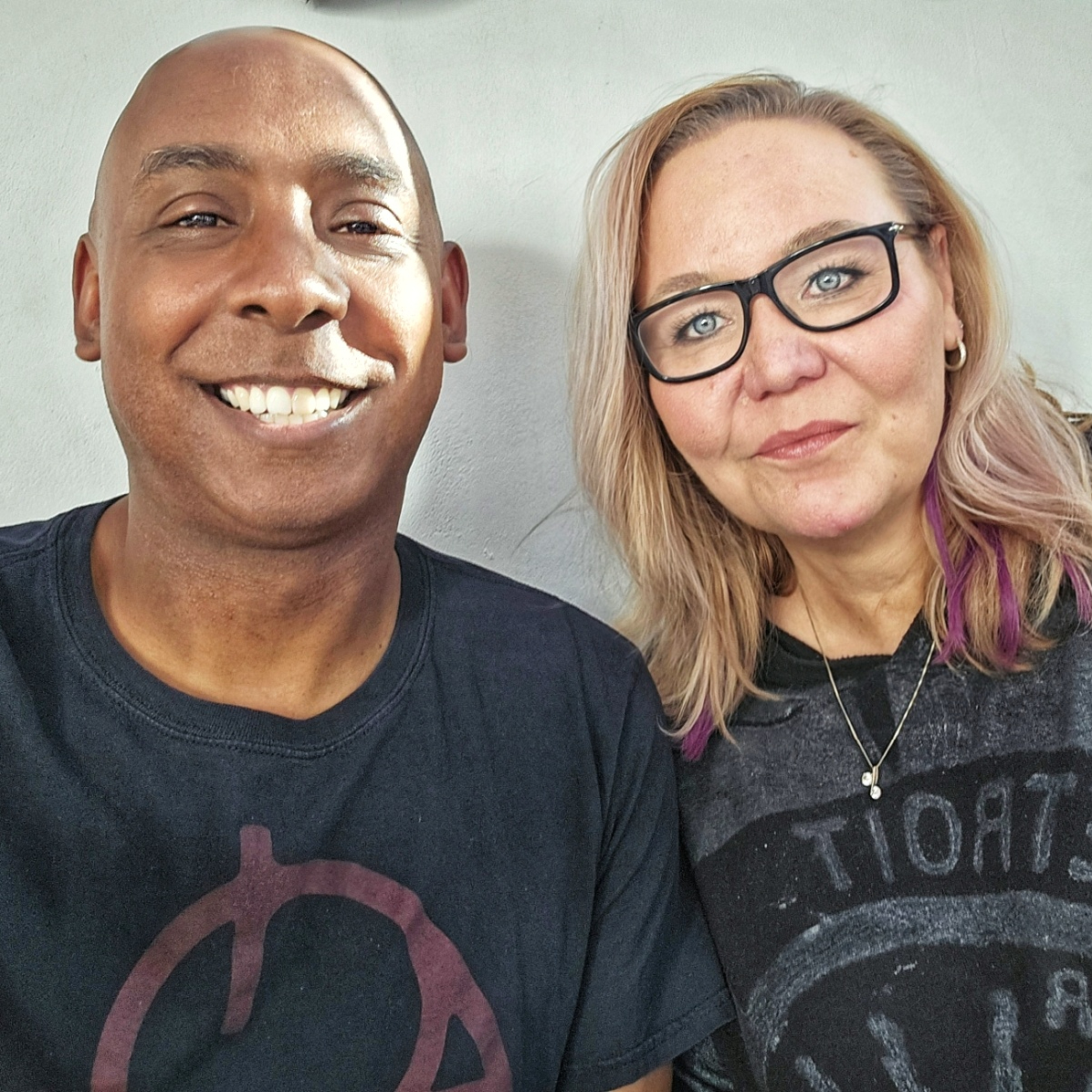
We are Jonathan and Karen Brown, an interracial Gen X couple. We moved from the US to Cuenca, Ecuador in January 2025, with our pit bull Soluna and a series of strong opinions about what honesty in expat content should look like.
Our editorial standpoint, in one sentence: expat is a privilege, immigrant is the truth, we use both honestly. Most expat content sells a fantasy. We are not interested in protecting the fantasy. If you are going to move your life across a border, you deserve information that reflects the world as it actually is.
That shapes the rest of this post.
Why people move to Cuenca, and the version we'd believe
The marketing pitch for Cuenca has been roughly the same for over a decade. Beautiful colonial city in the Andes. Mild year-round climate at 8,400 feet. UNESCO World Heritage status. Lower cost of living than the US. Friendly community. Strong infrastructure for South America. A core of long-term expats who have made it work.
All of that is broadly true. The pitch isn't a lie. But it's incomplete in ways that matter.
Here's the version we'd believe if we were starting our research over today.
Cuenca is a real, working, mid-sized Ecuadorian city of about 600,000 people, with a Cuencano middle class, a history that long predates expat arrival, and a culture that isn't optional information once you live here. The expat community is one slice of the city, not the city itself. The cost of living is meaningfully lower than the US in most categories, but it's risen since 2020 in ways that catch newcomers off guard. The bureaucracy is real. The altitude affects most people in some way. The weather is mild but not as consistent as the brochures suggest.
What Cuenca offers that's genuinely rare: a walkable, beautiful, mid-sized city at a price most North Americans cannot access at home, with public infrastructure (transit, healthcare, parks) that punches above its weight for its size and country. That is the real value proposition. The paradise framing flattens what is actually special.
If your decision to consider Cuenca is anchored in the realistic version, the move can be very good. If it's anchored in the fantasy, the first six months will recalibrate you, sometimes painfully.
What the move actually involves
Most people underestimate the timeline. We did.
A serious relocation to Cuenca, done well, takes about 12 to 18 months from the moment you decide it's a real option to the moment you're settled in your own apartment. Some of that is research, some is paperwork, some is moving logistics. None of it is optional.
The high-level arc:
- Research phase (months 1-4). Reading, watching, learning. Talking to people who have done it. Probably reading content like this. The research phase doesn't end, it just shifts focus.
- Scouting trip (month 4-6). A two to four week visit, ideally in different seasons if you can manage two trips. The scouting trip is where the abstract becomes specific. You walk the neighborhoods. You meet some people. You start to feel whether the city fits your actual life.
- Decision and visa work (months 6-12). Picking your visa category. Gathering documents. Apostilles. Translations. FBI background checks if applicable. This is the unglamorous middle of the move, and it's where most stalls happen.
- Move logistics (months 10-14). Selling, storing, or shipping the household. Pets, vehicles, the temporary US address question. The move itself.
- Arrival and settle (months 14-18). Short-term apartment for the first month or two. Cédula process. Real apartment search. Furniture. Utilities. Daily life.
"Most people underestimate the timeline. We did."
Some people compress this. We don't recommend it. Compression doesn't save time so much as redistribute it into the first six months in country, which is the worst time to be making major decisions.
If you're a serious planner narrowed on Cuenca, you're probably somewhere in phase one or two right now. The structured planning makes the rest much smoother.
A note on what we've built. We have a free Cuenca Neighborhood Map you can download if you're still in the orientation phase. It's the visual reference we wish we'd had on day one of research.
The honest cost of living in Cuenca in 2026
Most online cost-of-Cuenca content is between four and twelve years old. The numbers in those articles do not apply to 2026.
What is true in 2026:
Rent has risen significantly since 2020. A modern two-bedroom apartment in an expat-adjacent neighborhood (El Vergel, Zona Rosa, near Remigio Crespo) ranges from about $700 to $1,400 per month in 2026, depending on furnished status and amenities. The $300 to $500 rent that Cuenca was famous for in 2018 still exists, but it's increasingly in either farther-out neighborhoods, unfurnished units that require significant investment to make livable, or units that the local market grabs before they hit expat-targeted channels.
There are two markets in Cuenca: the local market and the gringo market. The same apartment can list for $600 to a Cuencano family and $1,000 to a newcomer expat. This isn't malicious; it's how markets segment when one side has more information than the other. Closing this gap requires either time, Spanish, local networks, or all three. Our Cuenca Housing guide walks through how to find the lower-priced market.
Food. The mercados are where the cost-of-living advantage shows up most clearly. A week's produce for two people from Mercado 10 de Agosto or Feria Libre runs about $20 to $30, often less. SuperMaxi (the main supermarket chain) is closer to US prices for most packaged goods. The almuerzo (the fixed-price daily lunch most Cuencano restaurants serve) is still $3 to $5 in most neighborhoods. Eating out at the high end runs $25 to $50 per person; eating out at the low end runs $5 to $10.
Healthcare. Major savings versus the US, even with insurance. A general practitioner visit at a private clinic is $25 to $50. A specialist is $40 to $80. A teeth cleaning is around $30. Hospital admissions for non-catastrophic care are a fraction of US costs. Private insurance plans (Confiamed, BlueBox, Humana, Sweaden) range from about $50 to $200 per person per month depending on age and coverage. IESS (Ecuador's public insurance) is $96 per month for a primary beneficiary, $19 for a spouse, with a three-month waiting period before coverage activates.
Utilities and infrastructure. Electricity, water, gas, and internet for a two-bedroom apartment run about $80 to $150 per month combined. Phone plans are $15 to $30. Public transportation (Tranvía, buses) costs around $0.35 per ride. Taxis and InDriver rides for short cross-town trips are $2 to $5.
What this adds up to. A retired or remote-working couple living modestly but comfortably can do it on $2,200 to $3,000 per month all-in in 2026. A couple living more comfortably (better apartment, eating out more, traveling occasionally) can do it on $3,500 to $5,000. Below $2,000 is possible but increasingly requires either farther-out neighborhoods, significant frugality, or both.
A note we have to make. These numbers assume stable income from outside Ecuador. The cost-of-living advantage is real, but it's relative. It's relative to whose income you're comparing, and to what life expectations you're carrying with you. A Cuencano family living on a teacher's salary is making it work on far less, in tighter circumstances, in the same city. We mention this because the cost-of-living conversation in expat content frequently flattens it. The math is the math. The framing matters.
"The math is the math. The framing matters."
Where to live: neighborhoods at a glance
Cuenca's geography is shaped by four rivers (Tomebamba, Yanuncay, Tarqui, Machángara), the historic core, and the surrounding hills. The neighborhoods most expats consider cluster in a few zones.
El Centro and the Historic Core. Cobblestones, colonial architecture, walkability, Parque Calderón at the heart. The dense, beautiful version of Cuenca. Trade-offs include noise (festivals are frequent and loud), occasional water-pressure issues in older buildings, and parking that effectively does not exist.
The walkable west-central zones (Zona Rosa, El Vergel, near Remigio Crespo). Where many expats end up. Mix of apartments and houses, walkable to restaurants and cafes, access to the Tomebamba river park. Rents are higher than peripheral neighborhoods, but the convenience earns its place for most expats.
The Gringolandia corridor (along Avenida Ordoñez Lasso). The most concentrated expat density in the city. Some find it comforting; others find it claustrophobic. It exists because long-term Cuenca expats settled there decades ago, the high-rises are well-built, and the proximity to expat-frequented restaurants matters to them.
South of the Yanuncay (Primero de Mayo, Don Bosco, El Batán). Quieter, more residential, more Cuencano. Lower rents. The trade-off is that you're a bit farther from the historic core. For some people, that's a feature.
Our Popular Neighborhoods guide and the Cuenca Neighborhood Map are the orientation we wish we had before our scouting trip.
Daily life: what we wish we'd known
The day-to-day rhythms of Cuenca are different in ways the marketing version doesn't capture.
The altitude. Cuenca sits at about 8,400 feet (2,560 meters). For most people, the adjustment is a few weeks to a few months. For some, it's longer. For a few, it never fully settles, and they end up moving to a lower-altitude city. Signs to watch for in your first month: persistent fatigue, sleep disruption, headaches, shortness of breath on stairs. None of these are signs the move was wrong. They are signs your body is doing the adjustment. Be patient with yourself.
The weather. Eternal spring is a real description and a misleading one. Cuenca's daytime temperatures stay between about 55 and 75 degrees Fahrenheit year-round. The nights drop into the 40s. The dry season (June through September) is bright and beautiful. The wet season (October through May) brings significantly more rain, often in afternoon storms. Most apartments do not have central heat or air conditioning. You will own more sweaters than you expected.
The internet. Generally good in central neighborhoods. ETAPA EP (the municipal utility) offers fiber service that's reliable for video calls and remote work. Speeds and reliability vary by neighborhood and building. If your work depends on consistent connectivity, verify this before you sign a lease.
The healthcare experience. Different from US healthcare in pace and expectation, but not lower-quality at the major private hospitals. Hospital del Río, Santa Inés, Monte Sinaí, and Universitario are the main private hospitals expats use. Doctors take their time. Appointments do not feel rushed. The system works on relationships; finding doctors you trust takes a few visits but pays off.
The pace. Things take longer. Not just bureaucracy. Everything. Stores close for lunch. Tradespeople show up when they show up. The line at the bank moves at its own speed. Punctuality is a different cultural concept than it is in the US or northern Europe. The choice is to fight it or to absorb it into how you plan your weeks. Most expats who stay learn to absorb it.
"You can survive in Cuenca with no Spanish. You will not thrive."
Spanish. You can survive in Cuenca with no Spanish. You will not thrive. The expat-bubble version of Cuenca exists, and it is available, but it's a small, repetitive version of the city. Real participation requires meaningful Spanish in the Cuencano usted register. Most expats who settle in well are spending at least some weekly hours on Spanish, whether through classes, tutors, intercambios, or daily practice. Our Spanish You'll Actually Use in Cuenca guide covers the highest-frequency situations.
The bureaucracy and the paperwork
This is the section with the highest ratio of dread to actual difficulty in most people's planning.
Ecuador has six main residency visa categories: Professional, Pensioner (Jubilado), Rentista, Digital Nomad, Investor, and Dependent (Amparo). Each has income or asset thresholds, document requirements, and different processing timelines.
We are not going to walk through the categories here; our Ecuador Visa & Bureaucracy guide does that comprehensively. What's worth knowing at the pillar-post level:
- The 90-day tourist visa can be extended to 180 days within a calendar year, but you cannot reset by leaving and coming back. The calendar-year limit catches most newcomers off guard.
- The visa application process can be done with a facilitator (most expats do this; the cost ranges from $1,500 to $3,000 per person) or DIY. DIY is possible but requires meaningful Spanish, time, and patience.
- Document apostilles (the international authentication of US documents) take two to eight weeks depending on the document type and the state issuing it. Start early.
- The cédula (Ecuadorian national ID) is what you actually want at the end. It unlocks banking, utility accounts in your name, IESS enrollment, discounts at many businesses, and the everyday functioning of life. The cédula process happens after your residency visa is approved.
We have heard people describe the bureaucracy as nightmarish, and others describe it as fine. Both are accurate. The variance is mostly about how well-prepared you arrive, how much patience you bring, and whether you're working with a good facilitator. Our Ecuador Visa & Bureaucracy guide walks through the categories, the documents, and the timing.
The community: what's true, what's hype
The Cuenca expat community has been one of the most-marketed features of the city for over a decade. International Living and similar publications have written about it as a key reason to move here. Most newcomers arrive with the idea that the community will help them land.
What's true: there is a community. It is findable. It has been around long enough that there are established venues, regular events, language exchanges, and Facebook groups where you can ask questions and get answers within hours. For people who arrive with intention and put themselves in the right rooms, building a social life in Cuenca is genuinely easier than building one in most US cities. This is real. It's one of the reasons we stayed.
What's also true: a lot of expat spaces here recreate the same hierarchies they had at home. Complaints about locals, nostalgia for colonial convenience, casual racism dressed up as just being honest.
This isn't an indictment of all expat community in Cuenca. There are people here doing meaningful work, building meaningful friendships, contributing to the local community in real ways. We have found our people, and we're grateful for them.
But the version of the community that gets sold in marketing materials is sanitized. If you're a person of color, a queer person, a person whose politics don't fold neatly into the we-left-the-US-for-our-reasons framing, you will want to vet the room before you commit emotional weight to it. That vetting is doable. It just isn't optional.
The local Cuencano community is its own conversation. We are guests in this city. We don't get to flatten what local community means or claim membership in it. What we can do is be respectful, learn Spanish, support local businesses, attend public events as participants rather than tourists, and recognize that integration is something Cuencanos extend on their terms, not ours. (We've written more about this in our From Where We Stand essays.)
"Integration is something Cuencanos extend on their terms, not ours."
Who Cuenca isn't for
Most relocation content is structured to convince you that the destination is right for you. We think honesty about the misfit cases is more useful.
Cuenca probably isn't a great fit if:
- You need beach. Cuenca is in the Andes at 8,400 feet. The Pacific coast is a four-hour drive or a 45-minute flight. The coast is beautiful, but you don't live near it from Cuenca.
- You can't function in mild weather. Cuenca is mild. Some people miss heat. Some people miss winter. Some people specifically wanted summer all year and find Cuenca's 65-degree-and-rainy stretches harder than they expected.
- You need fast-paced, big-city infrastructure. Cuenca is mid-sized and Cuencano-paced. If you've moved from a major US city expecting comparable amenities (24-hour delivery, vibrant nightlife, a deep international restaurant scene), you'll find a smaller version. Not a worse version. A smaller one.
- You can't or won't learn Spanish. Survival is possible without it. A real life isn't.
- You need specialist medical care that exists primarily in major research hospitals. Cuenca's healthcare is good for most things and excellent for some. It's not the right city for highly specialized care that requires a major research center.
- You can't tolerate uncertainty in bureaucracy or systems. Ecuador's systems work, but they don't work on the timelines or in the formats US-trained expectations are built for. People who need predictability struggle here.
- You're moving to escape rather than to build. This isn't unique to Cuenca. It's true of any international relocation. But the move tends to amplify what you bring with you. The people we've watched build good lives here are the ones who treated Cuenca as the next chapter, not the rescue.
This list isn't comprehensive. It's the version we feel confident saying out loud.
"The people we've watched build good lives here are the ones who treated Cuenca as the next chapter, not the rescue."
What to do next
If you're seriously considering Cuenca, three concrete next moves:
1. Plan a scouting trip if you haven't. Two to four weeks minimum. Ideally in a different season than your eventual move. Walk neighborhoods. Eat at the mercado. Attend an intercambio. Sit at Parque Calderón for an hour and just watch. The scouting trip is the single highest-information action available to you.
2. Get the Cuenca Neighborhood Map. It's free, and it's the visual reference we wish we'd had before our first trip. Knowing the zones of the city by the time you arrive saves days of orientation.
3. Join our free Facebook group, Moving to Cuenca | Planning & Your First Year. It’s for people researching the move, preparing to arrive, or navigating their first year here. Ask practical questions about visas, housing, healthcare, pets, packing, phone service, shopping, and the everyday details that don’t always fit neatly into a guide or blog post.
4. If you're ready to go deeper, the Cuenca Living Starter Kit is the full library of what we've learned: visa and bureaucracy, neighborhoods (descriptive plus map), housing search, daily setup, medical, culture, importing, pets, shopping, Spanish, where to meet expats, and the Cuenca Service Providers guide releasing in July. Fourteen guides for $77 founding pricing through June 26, 2026 ($107 regular after). It's the post-scouting-trip reading list.
If you're earlier in the comparison phase and Cuenca is one of several cities you're researching, our All-Access Bundle adds the Decision Toolkit (cost-of-living and budget worksheets), the Relocation Planning Toolkit (housing search, pets, packing, first 90 days), and the Move Abroad Prep Kit for $147 founding.
One last thing
We are writing this from Cuenca, eighteen months in. We are still learning. The version of Cuenca we know in 2026 will be different in 2028, and we'll update what we've written when it is.
That's the lifetime-updates promise that comes with our guides. It's also our editorial standpoint. We do not pretend to have the city figured out. We try to be honest about what we have seen so far. That's the contract.
We also publish on YouTube: videos on Cuenca, the move abroad, and the version of expat life that doesn't get filmed enough. youtube.com/@gen-xpat
Want more?
We are guests learning in public. If you're still working out whether moving abroad makes sense for you, our free Should I Move Abroad Midlife self-assessment is the easiest place to start. It's the question, sat with honestly, without rushing the answer.

More from GenXpat:
From Where We Stand: essays on race, gender, and the move abroad
Resources: guides, worksheets, and checklists for the move
Contact: questions, feedback, or a hello