What Doesn't Get Checked at Customs
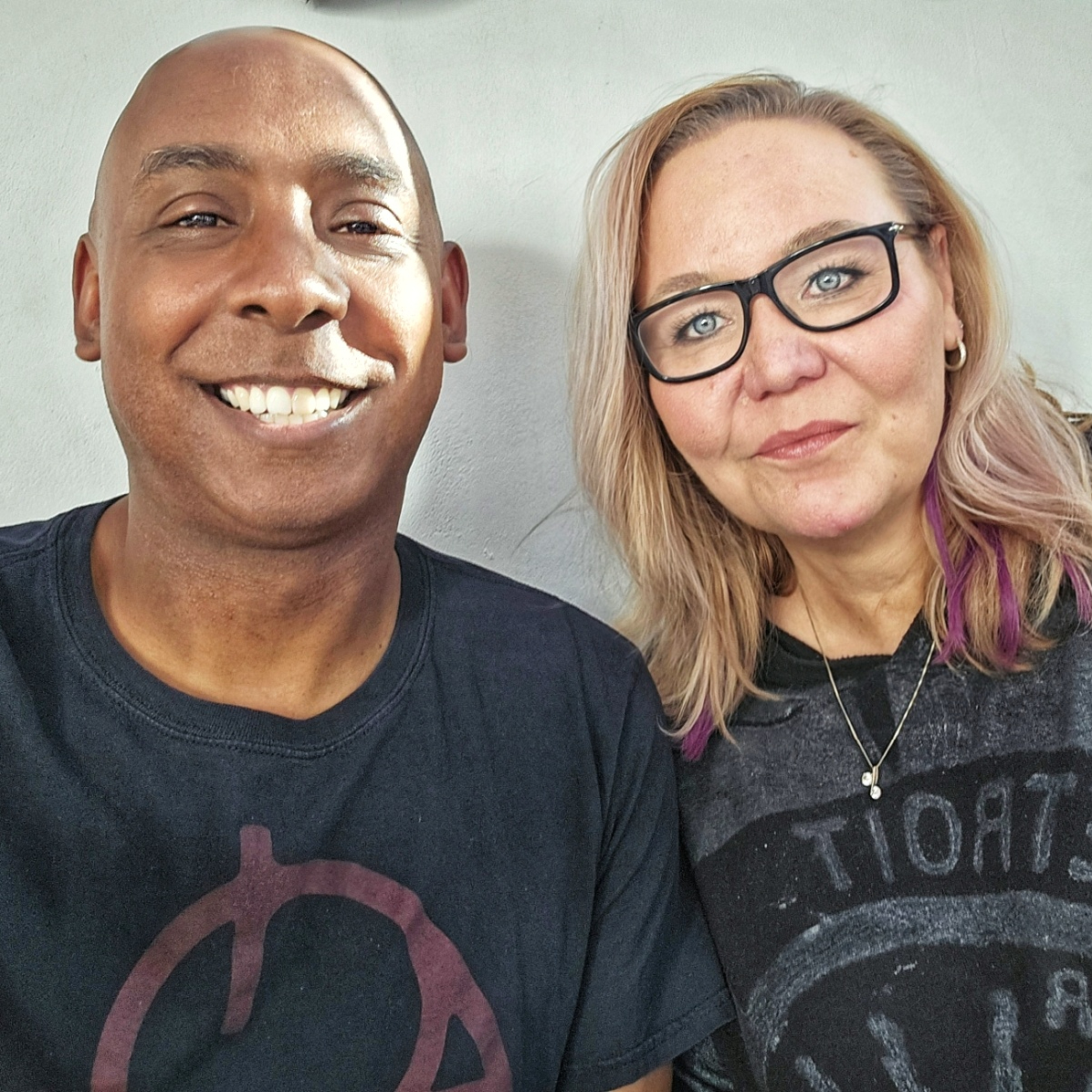
Two views from the same household. Jonathan first, because his experience isn't optional information.
Jonathan
I didn't suddenly become visible when we moved abroad. I'd been studied my whole life.
I'm the youngest of five, fourteen years behind the oldest, raised in an Air Force family that moved from base to base. We landed in Gwinn, Michigan, in the Upper Peninsula, when I was one. That's where I grew up. Only three other Black families lived off the base. My parents are silent generation, raised in Louisville, KY under Jim Crow, and they believed the UP was safer than what they'd left or what other family members were still dealing with. They weren't wrong about the specific kinds of danger they were avoiding. They also couldn't account for what it would mean for me, along with my brother and sisters too, being the only Black kid in most rooms we walked into. For my first eighteen years living in Gwinn, 95% of the time, I was the only Black kid in the room.
A lot of moving-abroad stories start from the assumption that standing out is a new experience. That assumption is white-centered. For some of us, visibility isn't an adjustment. It was just life for me. I learned early that my life happened inside other people's perceptions. I learned to work twice as hard, be overly respectful, and read every room I walked into for what it expected of me. By the time I crossed a border, I'd been doing that work for over fifty years.
What changes when you move abroad is the context. The rules shift. The categories shift. The need to read a room before I relax does not.
If you want the honest version of what changes when you move abroad, that's where it starts.
Karen
Whiteness wasn't invisible to me before we moved. I'd spent years learning to see it, name it, and account for the ways it shaped everything from the rooms I walked into to the assumptions I made about safety, competence, and belonging. That work didn't begin at the airport.
What the move did was strip the scaffolding away. I'd already known the systems worked for me in the US. I could explain it in conversation. I could see it in the way I was treated. What I hadn't fully felt was what daily life looks like when those systems aren't tilted in your direction by default. The patience I'd been met with. The assumption that I needed help, not scrutiny. The benefit of the doubt I'd been granted constantly. All of it, gone in a different way than I'd theorized.
That's not the same as discovering my privilege. That's living without the cushion of it for the first time, after years of knowing it was there. The difference matters. Naming the cushion isn't enough. Feeling its absence is a different kind of education.
The loss is real for most people who relocate. The weight of it isn't evenly distributed. That's still part of my job to name.
Daily life takes more after a move. Banking, appointments, paperwork, repairs. You're learning systems without cultural fluency. That part's tiring for everyone. The rest depends on who's doing the learning.
Jonathan
I'm not just learning logistics but managing how my mistakes get read. Confusion can look like defiance. Neutrality can look like a threat. The margin is smaller and the consequences are higher.
People love to say "you'll figure it out as you go," and I understand the spirit of that. However, that advice assumes a level of safety and forgiveness that isn't universal. When I make a mistake, I'm not just learning a system. I'm managing perception at the same time. It's another layer running in the background all the time. Deciding when to ask for help and when to keep my head down. It's a constant state-of-mind.
Moving abroad didn't create that for me. It changed the shape of it.
Karen
The same delays and miscommunications mostly land as inconvenience for me. Annoying and tiring. That's the limit of it.
I want to name that out loud because most expat content treats the inconvenience as if it's universal. It isn't. The same bureaucratic mess that costs me an afternoon costs other people more, and I don't get to pretend that's the same experience just because we're standing in the same line.
Visibility abroad isn't one thing. It travels with whatever you brought to the airport.
Jonathan
Sometimes I'm read as American first, which can come with a certain deference. Sometimes I'm read as Black first, which comes with scrutiny. Sometimes both. Sometimes neither. The unpredictability is its own kind of work.
White supremacy is global. It doesn't end at the US border. It adapts. It hides behind politeness, bureaucracy, and so-called cultural misunderstandings. Pretending otherwise is a luxury not everyone gets.
Karen
As a woman, I'm doing my own scan. Attention isn't always harmless and friendliness isn't always neutral. Safety is something I assess constantly, the way I've assessed it for most of my life, even when I'm not consciously naming the assessment. That work is familiar from the US. The cues here are different, but the work is the same.
I'm not going to compare that to what Jonathan is doing. They're not the same, and pretending they are would be its own kind of dishonesty.
Loneliness comes up in every relocation story. Where people look for belonging gets discussed less.
Jonathan
I'm going to call them expat spaces because that's what their occupants call them. Calling them anything else would do them a favor they haven't earned.
A lot of expat spaces recreate white-centered hierarchies right away. Complaints about locals, nostalgia for colonial convenience, casual racism framed as "just being honest." I can read those rooms inside thirty seconds. I've been in versions of them my whole life.
Some expat spaces feel familiar in ways that aren't comforting.
I'm not interested in belonging that requires me to tolerate disrespect so other people can stay comfortable. That's not a trade worth making.
Karen
The expat community is different when Jonathan isn't in the room.
I've heard things in those rooms I wouldn't have heard if he'd walked in two minutes earlier. Casual comments about locals, or assumptions about who's here and why. A version of "honesty" that's really just permission to say things people couldn't say at home.
My job in those moments isn't to absorb it and report back to him. It's to name it in the room. Sometimes I do that well. Sometimes I don't. Either way, that's part of being white in spaces where whiteness still assumes it owns the room.
Life moves more slowly here. Processes take longer. Waiting is normal. That's where the next gap shows up.
Jonathan
The bureaucracy here is its own thing. Slow, sometimes confusing, occasionally maddening. Most of the time, it's just the system. I'm not running the same background calculation I was running in the US, because the system isn't producing the same signals as often.
That doesn't mean the calculation is gone. It means it activates differently. When it lands, I know. There's a moment, a look, a tone, a decision that doesn't track with what just happened to the person ahead of me, and the read is immediate. I don't have to talk myself into it. I'm not second-guessing whether I'm imagining things.
What changed isn't the vigilance. It's how often the vigilance has to fire. In the US, the calculation was constant in ways I'd stopped noticing. Here, it gets to rest more. That's not nothing.
Karen
When I'm stuck in a delay, I'm annoyed. That's usually it. I'm not running two calculations. Just the one. The delay is just a delay.
I notice this now in a way I didn't before. Same situation, two different mental loads. That gap is the privilege.
What doesn't change
Your values come with you. You can pretend they didn't, but they did.
We brought a lot of things with us when we moved. Some of them showed up in checked bags. The rest came with us in less visible ways. In how we walk into rooms, how we read other people, what we let slide and what we don't. Those second ones don't get unpacked, exactly. They stay with you whether you tend them or not.
What we've watched happen to other people who moved here is that some of them try to set those things down. They believe they've crossed a border into a different politics. They start saying things in expat spaces that they wouldn't have said at home. They get nostalgic for conveniences that came at someone else's expense. They develop a sudden tolerance for casual racism dressed up as "just being honest." Selective amnesia, by another name.
We're not interested in that move. Not for us. Not after this long. Not after what staying clear-eyed has already cost.
A note on the word we keep using. We call ourselves expats because that's what the search engines, the systems, and most of our readers already call people in our situation. We're also immigrants. Both are true. The ability to choose between those words is part of the privilege.
White supremacy isn't confined to one country. It's a global structure. It changes form when it crosses a border, but it doesn't go away. Patriarchy travels the same way. So does empire. So does the long habit of certain people expecting other people to absorb their comfort. None of that gets checked at customs either.
If you're moving abroad, you can choose what to do with that. We're telling you what we chose, and why.
A clearer way to think about the decision
Moving abroad isn't one dramatic leap. It's a series of adjustments layered on top of who you already are.
The ones that aren't, most expat content skips, because they disrupt the fantasy. We're not here to protect the fantasy.
If you're thinking about moving abroad, especially in midlife, you deserve information that reflects the world as it actually is. That means naming white privilege. That means naming white supremacy. That means centering Black experience and women's experience without turning either into a footnote.
If your plan only works in the fantasy version of the world, it isn't a plan.
We also publish on YouTube: videos on Cuenca, the move abroad, and the version of expat life that doesn't get filmed enough. youtube.com/@gen-xpat
Want more?
We are guests learning in public. If you're still working out whether moving abroad makes sense for you, our free Should I Move Abroad Midlife self-assessment is the easiest place to start. It's the question, sat with honestly, without rushing the answer.

More from GenXpat:
From Where We Stand: essays on race, gender, and the move abroad
Resources: guides, worksheets, and checklists for the move
Contact: questions, feedback, or a hello